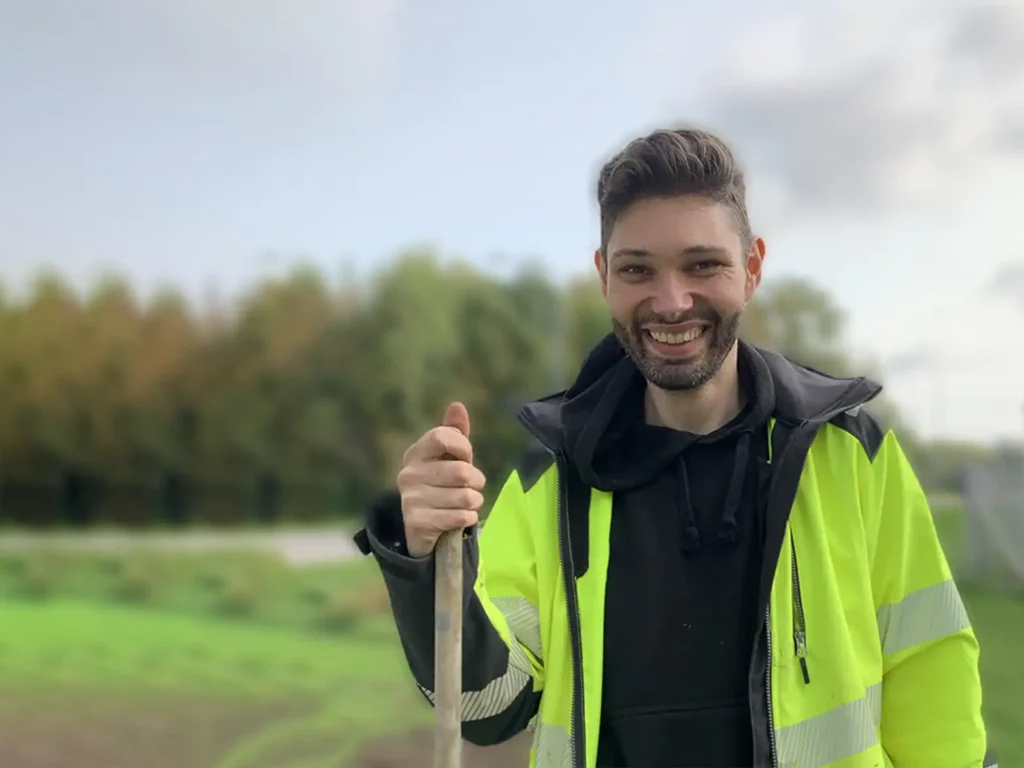
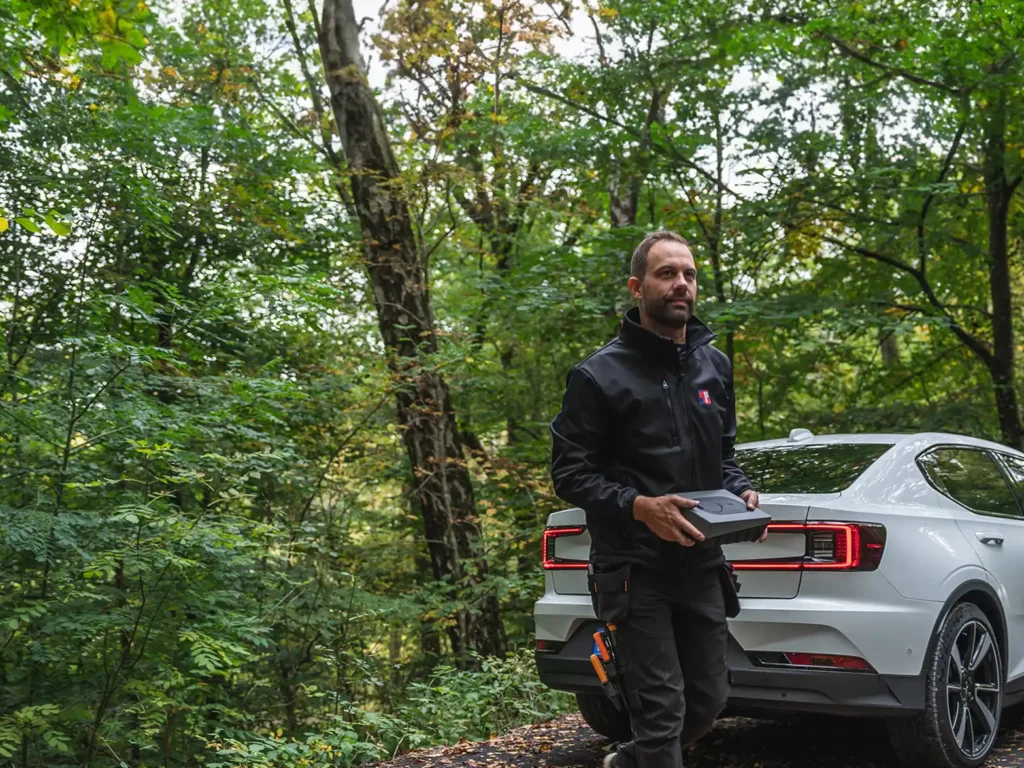
Knut-Arild is responsible for Transtema’s HSE work in Norway. He has worked in the telecom industry for 20 years and has held several different positions over the years. What he likes most about his job is being able to help make the daily lives of his colleagues safer. In this article you will learn more about what it means to work as Head of HSE and how Knut-Arild, originally a helicopter pilot, came to work in telecom.
Can you describe your work as Head of HSE?
– As the Head of HSE, my main task is to create a systematic approach to HSE, health, environment, and safety, for our employees in Norway. This means that I work on developing documentation, processes, and routines to ensure that we can perform our work in a safe and secure manner. My days consist of meetings and dialogues with employees and safety representatives, conducting risk assessments of new work tasks, and being out in the field.
– I am analytical and like structure, order and tidiness. Being able to see patterns and work methodically is something I find very useful in my job, for example, because part of the job is to continuously follow up on incidents and risks so that we can take the right actions to prevent them from happening again.
What is the most challenging part of your job?
– The most challenging part is making sure that the culture and people’s behavior change. Even if we develop and agree on a routine, it is not certain that everyone will follow it in every situation. Getting people to change and prioritize HSE in relation to production and financial results is a challenge that I am constantly working on. The most important thing to move forward is to create understanding among the employees. If they are involved from the beginning and can influence things, it is much easier to find the best solutions.
– Transtema Norway has recently undergone a lot of changes; we have gone from being separate companies to becoming one company, so the routines and processes for how we have worked have looked a bit different. Right now, I am therefore working a lot on ensuring that we unify our processes and routines and making sure it is clear who is responsible for what in the company.
How has your journey in the telecom industry been?
– I started as a telecom technician at a friend’s company who needed help. The idea was that I would work for a few weeks since I had just decided to change careers. I am actually trained as a helicopter pilot and worked as one for a few years in the USA. When I returned to Norway, I had to decide whether I wanted to invest the time and money to continue as a pilot or do something else. Then the opportunity to work as a telecom technician came up, and that was almost 20 years ago, so it turned out to be a bit more than just a few weeks’ work in the industry.
– I’ve had a varied and exciting career during my 20 years in the industry. I started as a technician and then moved on to the role of site manager on larger projects. After that, I worked as a project manager where I led improvement projects focused on increased efficiency and quality in fieldwork. In recent years, I have been responsible for the business area of mobile indoor coverage while also working more and more with HSE and quality. Now I have taken the next step and work full-time as the Head of HSE. There are, of course, many differences between being a helicopter pilot and working as the Head of HSE, but one thing the roles have in common is the focus on safety.
What is the best part of your job?
– The best part of my job is the whole idea of the mission – that everyone should be safe at work and come home securely. It feels meaningful to work on something that contributes to fewer people getting injured at work and knowing that what I do helps make the work environment safer for my colleagues.
– Being out in the field is the most important and enjoyable part of my job. Then I get the opportunity to talk to employees and get feedback from those who are out in the operations and encounter different work tasks every day. The most important thing when I am out in the field is to listen, and then I also try to answer questions as best as I can. Even though I have been a technician and worked out in the field myself, it is important for me to be humble about the fact that things are constantly changing, and the best way to find out how things are now is to be out in the field and listen to my colleagues.