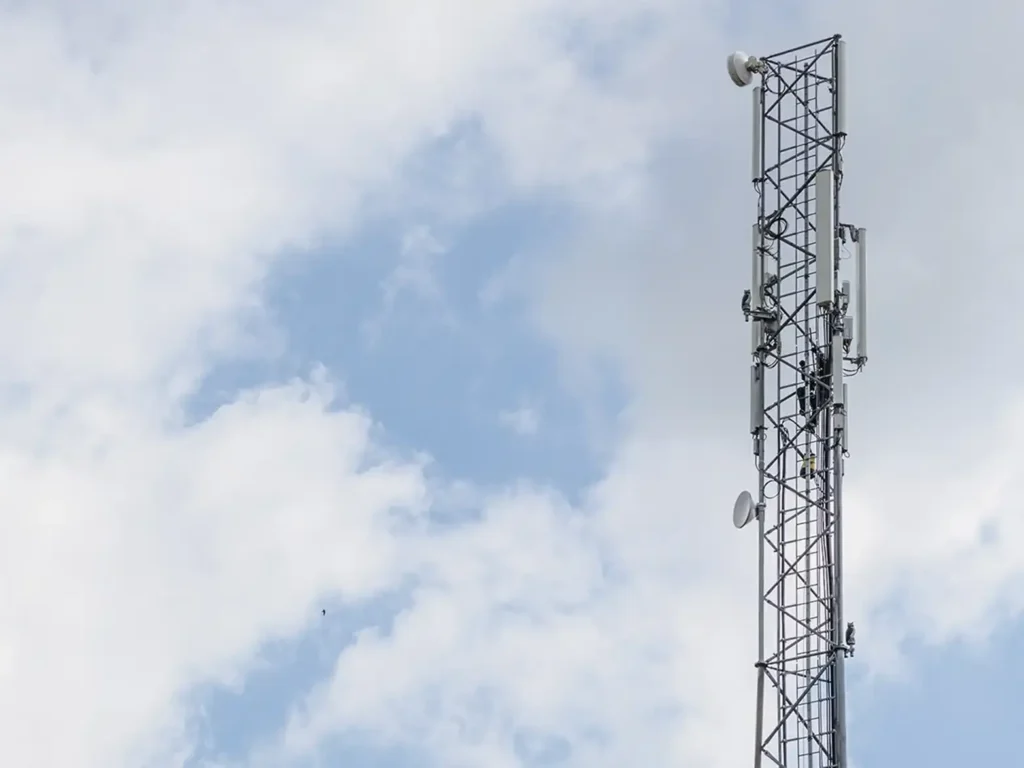
Fiber networks are the backbone that keeps society running. Everything from emergency calls to power grids, payment systems, drinking water, mobile networks and data centers depends on fiber networks working. When we talk about fiber, we are not just talking about fast internet. We are talking about critical infrastructure.
This guide explains what a fiber network is, how it works, why the technology is superior to other broadband solutions and the role fiber networks play in a modern society.
What is a fiber network?
A fiber network is a network of optical cables that transmit data as light signals. Each fiber is thin, flexible and designed to carry large volumes of information over long distances without signal loss and without interference.
What makes fiber unique:
- information is transmitted using light, not electricit
- the signal is not affected by weather or electromagnetic fields
- the technology ages very slowly
- the infrastructure remains robust even under high load
Fiber is therefore one of the few networks capable of handling future data volumes without replacing the cables.
How does a fiber network work?
Data is transmitted as light
The light source in the system, often a laser, encodes data in pulses. These pulses travel through the fibers at close to the speed of light.
The fiber guides the light
Optical fibers consist of two layers:
- the core, where the light travels
- the cladding, which keeps the light contained through total internal reflection
This allows the signal to travel long distances without losing speed.
Nodes and stations amplify and distribute signals
Nodes, ODFs, access points and transmission equipment handle:
- routing
- redundancy
- traffic management
- fault detection
The endpoint converts light into data
At the user end, a media converter or router translates the light into digital data.
Fiber cables. The most critical component of the network
Fiber cables are built to withstand harsh environments such as cold, moisture, saltwater, ground pressure, wind load, vibration and mechanical stress.
A fiber cable may consist of:
- microducts or microchannels
- polyethylene outer sheath
- water blocking gel
- armoring for load
- hundreds of optical fibers
Why this matters:
When building critical infrastructure, it is not enough for the network to usually work. It must work around the clock, all year.
Benefits of fiber networks
The highest possible speeds
Fiber is the only technology capable of true symmetrical high speeds, which is critical for:
- real time video meetings
- IoT systems
- digital safety services
- business critical applications
Low latency. Essential for critical systems
When information travels as light, response times become extremely low.
This is required when:
- control centers monitor power grids
- safety alarms transmit signals
- autonomous systems need to react instantly
Greater stability than copper and coaxial
Fiber is not affected by lightning, electromagnetic interference or temperature variations.
World class scalability
Capacity is practically unlimited. Increasing data volumes are handled by:
- upgrading active equipment
- optimizing wavelengths
- improving transmission solutions
The cable itself usually does not need to be replaced.
Fiber vs other networks
| Properties | Fiber | Coaxial | Mobile broadband |
|---|---|---|---|
| Speed | Very high | Medium | Varies |
| Latency | Very low | Medium | Varies |
| Affected by weather | No | Yes | Yes |
| Capacity | Almost unlimited | Limited | Limited |
| Stability | Very high | Medium | Medium |
| Best suited for | Critical infrastructure | Consumer use | Mobility |
Where are fiber networks used?
- safety alarms and healthcare systems
- power and energy infrastructure
- payment transactions
- mobile base stations and 5G backhaul
- public services
- industrial control systems
- data centers
- district heating and water monitoring
When the network is down, the entire society is affected.
The role of fiber in critical infrastructure
When fiber networks fail, it can impact:
- emergency communications
- fuel supply
- hospital communications
- security systems
- energy distribution
- public transport
This is why fiber must be monitored, maintained and addressed proactively before problems occur.
Benefits of fiber networks
Several trends point in the same direction:
- increasing data volumes
- more IoT devices
- greater automation of societal functions
- higher requirements for security and redundancy
- geographically distributed operations
- climate change increasing stress on networks
Fiber networks are the only technology capable of meeting future demands without rebuilding the entire infrastructure.
FAQ – Common questions about fiber networks
Is fiber faster than 5G?
Yes. 5G depends on fiber at its core. Without fiber, mobile base stations cannot operate.
How fast is fiber?
Modern fiber networks deliver 1 to 10 Gbit per second to end users. Core networks support significantly higher speeds.
Can fiber break?
Yes, but rarely. Most outages are caused by cable damage during excavation work.
Is fiber future proof?
Yes. Capacity is increased by upgrading active equipment, not the cable itself.
Is fiber expensive to build?
It depends on ground conditions, distances and redundancy requirements. Operating costs are low.